
Ever seen a product ad that looks a little too perfect? Maybe it’s a gadget you’ve never heard of, with flawless images, no real brand name, and a suspiciously low price. You’re not imagining things—this is a real problem in 2025 and it’s harder than ever to spot fake products online.
Fake and AI-generated products (sometimes called “ghost products”) are flooding social media ads and marketplaces. They look great on screen… but they don’t actually exist. Shoppers are getting tricked into buying items that never arrive—or worse, don’t exist at all.
The ripple effect? Once someone gets burned, they become way more skeptical of everything—even real, legit products from small businesses that are worth supporting.
That’s why I put this guide together: how to spot fake products online, shop smarter, and skip the scams. And if you’re tired of playing detective? I’ll also share why platforms like Grommet take the guesswork out completely.
Why Fake & AI-Generated Products Are a Real Problem in 2025
We’ve entered a new era of online shopping—one where not every product you see actually exists.
Thanks to advances in generative AI and 3D design tools, it’s easier than ever for scammers to create hyper-realistic product images and post them on platforms like Etsy, Amazon, and in targeted Meta ads. But what looks like a real product is sometimes nothing more than a digital mockup—no inventory, no maker, no intention of ever shipping anything real.
Here are a few places where this is playing out in a big way:
- Etsy crochet patterns: Some shops list photos of beautifully finished crochet animals, toys, or blankets—but sell only a vague PDF pattern that doesn’t match the image. In some cases, the photos were generated by AI or stolen from real creators.
- Fake 3D ornaments: Holiday ornaments featuring “wooden” or “engraved” designs that don’t actually exist physically. The listings often use AI-generated lighting and reflections to make them look handcrafted—but buyers receive a completely different product. I personally fell for this at Christmas when I ordered three 3D ornaments for my kids (example shown below).
- Crystal mugs and quartz cups: These eye-catching “mugs” made from rose quartz or amethyst keep popping up in ads. But many of the photos are entirely AI-generated. Real versions would be too fragile or expensive to mass produce—and reviews (if any exist) often reveal buyers received cheap resin imitations or nothing at all.
- Fake robot animals: They’re so cute you want them to be real. You’ve likely seen these ads–their life-lack videos stop your scroll for sure. And, they’re everywhere on Facebook, Instagram, and Pinterest. It’s a shocker they’re still allowed to advertise (but that’s another post).
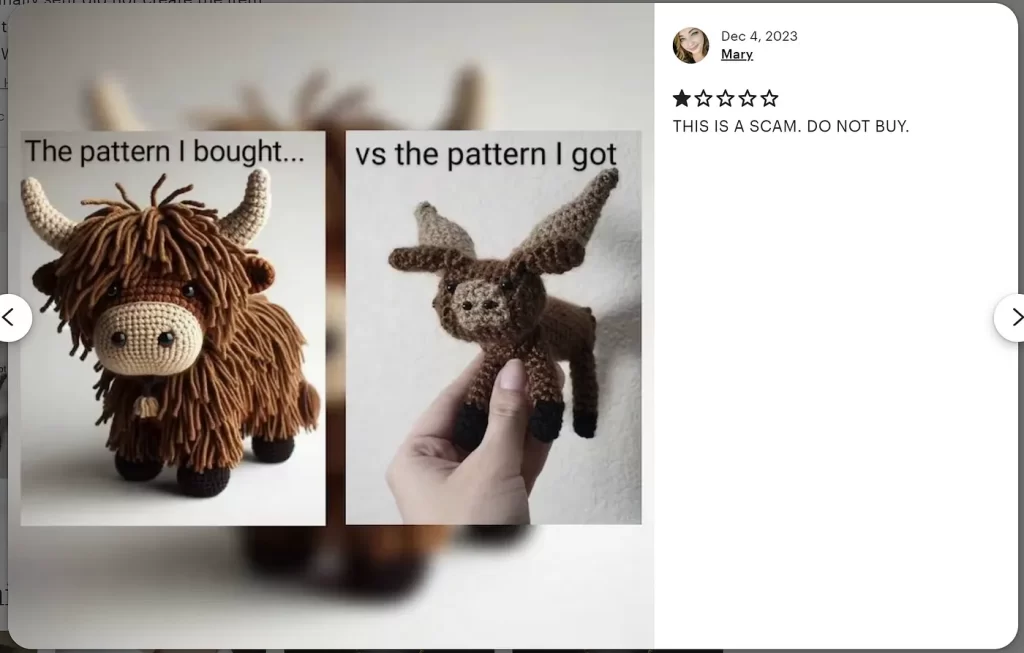
Example of review from etsy.com

example ads from Pinterest.com pulled June 2025
The kicker? These listings often have no real return policy, no way to contact the seller, and disappear shortly after going live—leaving Shoppers with empty wallets and at best, a product shipped nothing like the one advertised. Not to mention once you purchase, the seller has your personal information on hand.
As the tools to generate fake products get better, it’s becoming harder to tell what’s real at a glance. That’s why knowing what to look for—and where to shop—matters more than ever.
How to Spot AI-Generated Products & Fake Product Ads
You don’t need to be a tech expert to protect yourself. With just a few quick checks, you can usually tell whether a product is the real deal—or just a digital illusion. Here’s what to look for:
1. Too-perfect product photos and product discrepancies
If the product looks like it came straight out of a video game or Pixar movie, trust your gut. Look for visual red flags like:
- Unrealistic lighting or reflections
- Text that looks warped or unreadable
- Product features that just don’t line up, are weird sizes, or aren’t the same from image to image
- Odd-looking hands or objects floating in space
Tip: Use Google Lens or a reverse image search to see if the photo is AI-generated or stolen.
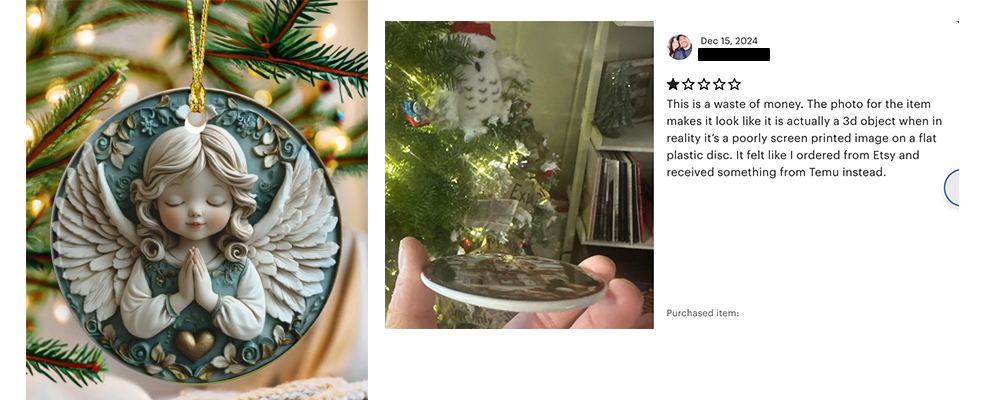
example of review of ornament I ordered from etsy (shop still active)
2. No sign of a real brand or Maker
Legit products usually have a story—who made them, how they’re made, and why they exist. If there’s no brand name, no “About” section, or no social presence beyond the ad? That’s a big red flag.
3. Suspicious or missing reviews
Be wary if:
- There are no reviews at all
- All reviews are vague (“Great!” “Loved it!”) with no detail
- Reviews seem copy/pasted or all posted around the same time
- The reviews have no images or videos
4. The store looks like it popped up overnight
Fake product pages often look polished—but lack depth. Ask yourself:
- Is there a real website beyond this one page?
- Can you find any contact info or policies?
- Do they list a real business address or social accounts?
5. Shipping delays or missing return policies
Scam shops tend to list long shipping windows or avoid returns altogether. Look for clear details:
- When will it ship?
- How can you return it?
- Who covers shipping if something goes wrong?
No answers? No thanks.
6. Price is way too good to be true
Sure, everyone loves a deal. But if a product that looks handcrafted is being sold for $12 with free international shipping… something’s off.
Want to Avoid Fake Products? Shop Where Trust Is Built In
If all of this feels like a lot to keep track of, you’re not wrong. It’s frustrating that Shoppers have to do so much detective work just to feel confident hitting “buy.” And while these tips can help, the reality is: trust should be built into the shopping experience—not something you have to earn back after being burned.
That’s one of the reasons I continue to believe in platforms that actually curate what they sell.
If you’re not familiar with how that works, I recently wrote about what Grommet is and how it works. It’s a platform that features only real products from real small businesses (disclosure: I’m the head of Shopper Marketing at Grommet). Every product goes through a vetting process before it ever hits the site—so shoppers don’t have to wonder who made it, how it works, or whether it even exists. That work has already been done. In fact, we touch, feel and use every product that gets launched on Grommet. It’s work we pride ourselves in and take very seriously.
When you shop on a platform that puts transparency first, you can skip the endless scroll and second-guessing. You’re not just buying a product—you’re backing a Maker with a story, and getting something that was actually made to be used, gifted, and loved.
Final Thoughts
AI isn’t the enemy—in fact, it can be a powerful tool for creativity, discovery, and innovation. But like anything, it can be misused. That’s why staying informed matters. When you shop with intention, ask questions, and support platforms that prioritize trust, you’re not just protecting yourself—you’re helping shape a better internet for everyone.
If you know someone who’s been burned by a fake product ad, share this post with them. And if you’ve got a tip or experience of your own—drop it in the comments below.


 Tori Tait is sharing her experience as a Content Director and Pinterest expert. Since 2006 she's been helping entrepreneurs build their businesses online through simple & smart marketing strategies.